If you’ve ever Googled “DC transformer,” you’re not alone. Thousands do every month, expecting to find a gadget that steps up or down direct current (DC) voltage as easily as transformers handle alternating current (AC). But here’s the kicker: there’s no such thing as a traditional DC transformer.
Instead, what you’re really looking for is a DC-DC converter—an ingenious piece of engineering that acts like a transformer for DC. Confused? Don’t worry. By the end of this article, you’ll not only understand the terminology but also appreciate how these circuits work their magic, especially in common 12V and 24V DC systems.
Why Transformers Don’t Work on DC
Let’s clear the air: a traditional transformer relies on electromagnetic induction, which occurs only when there’s a changing magnetic field. AC provides that change naturally by alternating direction dozens of times per second.
DC, on the other hand, is stubbornly steady—it flows in one direction and doesn’t change. No change means no induction, and no induction means your transformer just sits there like a glorified paperweight.
This is why the phrase “DC transformer working principle” is actually a bit of a misnomer. The good news? Engineers found a way around this limitation—by making DC behave like AC… sort of.

What People Really Mean by “DC Transformer”
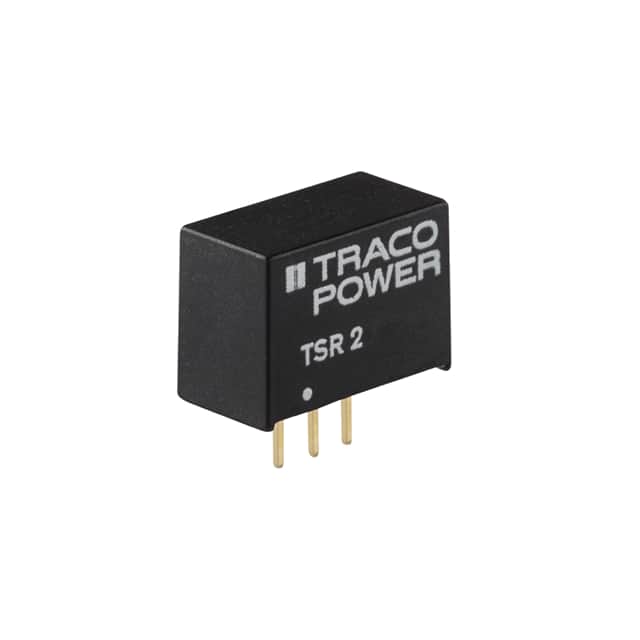
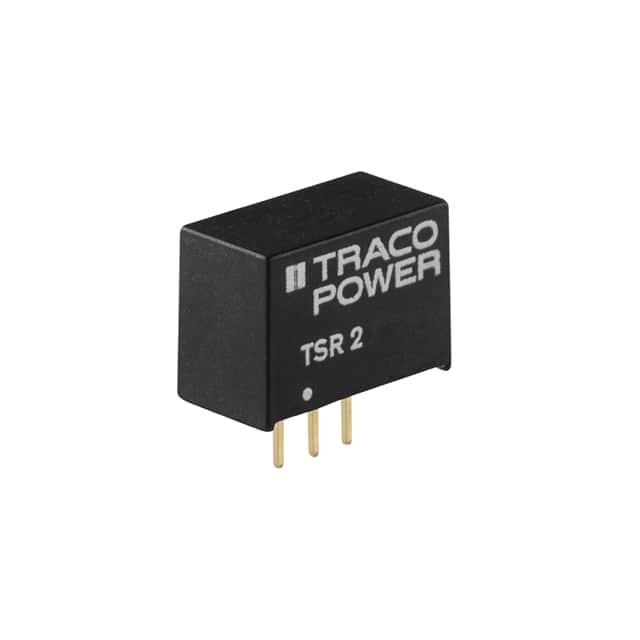
When you hear “DC transformer,” it’s usually shorthand for a DC-DC converter, a circuit designed to adjust DC voltage up or down efficiently.
These converters are used in everything from LED lighting systems to electric vehicles. Their working principle involves chopping up the DC voltage into pulses, processing those pulses, and smoothing them back into stable DC at the desired level.
The search queries like “dc transformer how it works” and “dc transformer working principle explained” are best answered by describing this process—so let’s dive in.
How a DC Transformer Actually Works

At its heart, a DC-DC converter, your so-called DC transformer is like a chef who slices, cooks, and plates your DC voltage into the perfect serving. Here’s the recipe:
| Step | What Happens |
|---|---|
| Step 1: Input Stage | The converter takes in a steady DC supply (like 12V or 24V). |
| Step 2: High-Frequency Switching | A transistor or MOSFET acts as a lightning-fast switch, turning on and off thousands of times per second to create a pulsed waveform. |
| Step 3: Energy Storage | Inductors and capacitors temporarily store energy during on/off cycles. |
| Step 4: Controlled Release | Stored energy is released in a controlled way, adjusting voltage as needed. |
| Step 5: Feedback & Regulation | A control circuit monitors output and tweaks the switch timing to keep voltage stable. |
| Step 6: Output Filtering | Filters smooth the output, delivering clean DC at your desired voltage. |
Think of it as teaching your DC to “dance” briefly—just enough to make transformation possible.
also read:
12 Volt DC Transformer: How It Works and When to Use
Ah, the beloved 12V system—the darling of automotive, LED, and portable device enthusiasts.
A “12 volt DC transformer” is essentially a DC-DC buck (step-down) or boost (step-up) converter, depending on whether you need to drop or raise the voltage.
Common 12V Applications:
- Automotive electronics (radios, GPS, cameras)
- LED strips and fixtures
- DIY portable gadgets
- Solar-powered devices
Why Use It?
Because 12V is ubiquitous and relatively safe, many devices are designed to operate at this voltage. But batteries and supplies often fluctuate—so a 12V DC-DC converter ensures clean, reliable power.

24V DC Transformer: How It Works and Applications
For the big leagues, there’s 24V—favored in industrial and heavy-duty settings where higher voltage means lower current (and lower losses).
A “24v dc transformer” is once again a DC-DC converter, tailored for 24V input and output systems, or to step down 24V to 12V, 5V, etc.
Common 24V Applications:
- Industrial automation systems
- Communication equipment
- HVAC controls
Heavy vehicles (trucks, buses, construction equipment)
Why Use It?
24V offers improved efficiency over long runs and better support for high-power loads. A reliable DC-DC converter keeps your sensitive electronics safe from voltage spikes and drops.
Conclusion
To wrap it up: if you came here looking for a DC transformer, now you know what you’re really after—a DC-DC converter. It doesn’t just work; it works elegantly, using high-frequency switching and clever control to deliver exactly the voltage your devices crave.
So next time you shop for one, you can smile knowingly and say, “Ah, yes—a DC-DC converter. I know how this works.”