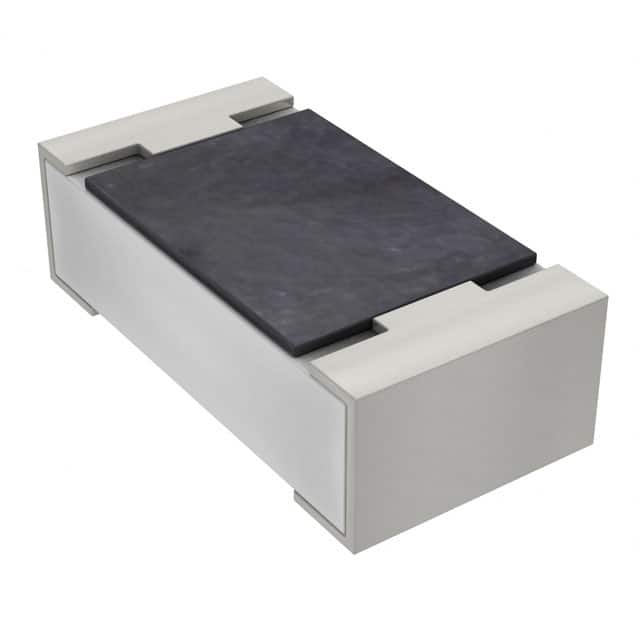
Electronic components have become an integral component of modern life, and choosing the appropriate element for your project can significantly affect its performance, efficiency, and cost. Two devices commonly used to regulate electrical current are transistors and MOSFETs - understanding their differences is key when selecting one over the other for specific needs.
In this post, We will explore MOSFETs: Metal-Oxide-Semiconductor Field-Effect Transistors and traditional transistors while exploring their advantages, disadvantages, and applications in detail.
What Is a Transistor?
A transistor is an electronic semiconductor device that regulates current flow within a circuit by acting as an amplifier and switch. As an integral component in digital and analog electronics, transistors form part of virtually all microcontrollers and integrated circuits, from simple microprocessors to advanced integrated systems.
Two primary types of transistors exist: Bipolar Junction Transistors (BJTs) and Field-Effect Transistors (FETs).
While BJTs use electron and hole charge carriers to regulate current, MOSFETs rely on the voltage applied at their gate terminal to manage the flow of charge carriers through semiconductor channels.
What Is A MOSFET?
A MOSFET is a type of FET that employs an insulated gate, typically silicon dioxide, to regulate current between its source and drain terminals. This enables MOSFETs to function with high input impedance while drawing minimal current from their control source. Common types include the N-channel MOSFET using electrons as its primary charge carriers and P-channel MOSFETs utilizing holes.
MOSFETs stand out from BJTs in that they are voltage-controlled rather than current-controlled. This aspect significantly alters their behavior in circuits, making MOSFETs better suited for high-speed, energy-efficient applications that require minimal current to regulate devices such as their control.
Key Differences Between MOSFET and Transistors
MOSFET and BJT are essential components in modern electronics. Still, their operating principles, control mechanisms, and performance characteristics differ significantly. Engineers and designers need to know this difference when selecting which component to use in their circuits. Below are a few key differences, with examples drawn from real applications.
Control Mechanism
MOSFETs are a voltage-controlled device. Current flow between the source and drain is managed by gate voltage; any voltage applied to this gate creates an electric field that modulates channel conductivity between the source and drain.
BJT: Current-controlled device. A small base current controls the larger current flowing from the collector to the emitter.
BJTs are frequently employed in audio amplifiers because of their excellent linear amplification properties: output current proportional to the input current.
Input Impedance
These MOSFETs typically feature high input impedance (typically in the megaohm range). Their extremely high impedance means they draw minimal current from their driving source, thus minimizing loading effects and improving efficiency.
BJTs have low to moderate input impedance that is heavily determined by their base-emitter junction, creating significant loading effects on their driving circuits.
BJTs are often employed in low-frequency analog amplification applications; however, designers must account for their loading effect, particularly when designing audio amplifiers with high input impedance requirements.
Switching Speed
MOSFETs Offer Fast Switching. Since they're voltage-controlled, MOSFETs can switch on and off quickly - perfect for high-frequency switching applications!
BJT: Switching speeds should be adjusted downward, particularly when transitioning from saturation or dealing with minority carrier recombination (storage time).
BJTs are widely utilized in analog circuits such as current source circuits or oscillator oscillator designs; however, their storage time makes them slower in switching applications than their counterparts.
Power Consumption
MOSFETs offer lower power consumption when switching applications as they draw less current from their gates than conventional MOSFETs. This makes them highly energy-efficient solutions, particularly for battery-operated devices.
BJTs have higher power consumption due to the continuous current flow required at their base terminal, which necessitates constant power usage - especially for switching applications.
BJTs may not be suitable for low-power switching applications like LED driving circuits due to their base current consumption, which continuously consumes power and makes their use inefficient compared with MOSFETs.
Thermal Stability
MOSFETs boast superior thermal stability. They are less susceptible to thermal runaway, where rising temperature increases current consumption, leading to further rises in temperature, resulting in device failure.
BJTs can become subject to thermal runaway if they are not carefully managed. This leads to increased current gain as the temperature rises, potentially resulting in irreparable damage if they are not sufficiently cooled or biased.
BJTs must be administered carefully in high-current power supplies to avoid failure due to thermal runaway, which could otherwise lead to failure - especially during linear amplification.
Applications
MOSFETs are ideal for digital circuits, high-speed switching, and power supply applications due to their voltage-controlled operation and increased efficiency when operating at high frequencies.
BJTs are commonly employed for analog amplification, low-voltage switching, and high-current applications that require current amplification, particularly where linearity is essential. They excel in these situations.
BJTs are widely utilized in audio amplification systems due to their high current gain and ability to amplify low-frequency signals. This advantage makes them the perfect solution for producing high-fidelity sound reproduction.
also read:
Advantages and Disadvantages of MOSFETs and BJTs
| Feature | MOSFET | BJT |
|---|---|---|
|
Advantages |
Control Mechanism: MOSFETs are voltage-controlled, requiring very little current to control, which leads to better energy efficiency. BJTs are current-controlled, providing strong amplification and better control in analog applications. |
|
|
Input Impedance |
MOSFETs have very high input impedance (typically megaohms or higher), making them ideal for low-load circuits. |
BJTs have lower input impedance (kΩ range), which might load the driving circuit in some applications. |
|
Switching Speed |
MOSFETs have faster switching speeds, ideal for high-speed digital circuits, high-frequency applications, and microprocessor designs. |
BJTs are slower, especially in saturation mode due to storage time. |
|
Power Consumption |
MOSFETs have low power consumption in switching applications due to minimal gate current requirements. Great for battery-powered devices and energy-efficient systems. |
BJTs consume more power due to continuous base current flow in switching operations. |
|
Thermal Stability |
MOSFETs have better thermal stability and are less prone to thermal runaway, making them suitable for high-power, high-temperature applications. |
BJTs are more prone to thermal runaway in high-current conditions, requiring careful thermal management. |
|
Cost |
MOSFETs are more expensive than BJTs, especially in high-power applications. However, MOSFETs offer greater efficiency in such applications, justifying the cost. |
BJTs are cheaper than MOSFETs, especially for low-power applications. |
|
Integration in ICs |
MOSFETs are easier to integrate in CMOS technology for high-density, low-power digital circuits, leading to compact designs. |
BJTs are more complex to integrate into ICs for high-speed applications due to higher input currents and lower switching speeds. |
|
Disadvantages |
Current Gain: MOSFETs have lower current gain, making them less ideal for high-power current amplification tasks. BJTs provide higher current gain, making them ideal for current amplification applications like audio amplification. |
|
|
Electrostatic Sensitivity |
MOSFETs are sensitive to electrostatic discharge (ESD) due to the thin oxide layer on the gate. Care must be taken during handling. |
BJTs are less sensitive to electrostatic discharge (ESD), which makes BJTs more robust in terms of handling. |
|
Cost for High-Power Applications |
MOSFETs can be more expensive than BJTs for high-power use. However, MOSFETs offer greater efficiency in such applications, justifying the cost. |
BJTs are lower cost for high-power applications but may face efficiency challenges compared to MOSFETs. |
|
Application Flexibility |
MOSFETs are best for digital circuits, high-speed switches, power management, and RF amplifiers. Less effective in applications needing high current gain or linear amplification. |
BJTs are best for analog circuits that require high linear gain like audio amplifiers, low-voltage switching, and high-current tasks. |
|
Thermal Management |
MOSFETs are less susceptible to thermal issues but still require good heat dissipation in high-power applications. |
BJTs are more prone to thermal runaway and require better cooling and careful design to prevent thermal damage. |
Conclusion
MOSFETs and BJTs both play key roles in electronics, each excelling in its field of application. MOSFETs excel in fast-switching digital circuits due to their voltage control, fast switching Speed, thermal stability, and thermal regulation capabilities. In contrast, BJTs excel with analog amplification thanks to their lower current gain capabilities.
BJTs, on the other hand, are ideal for analog applications requiring high current gain and linear amplification, such as audio amplifiers. While more cost-effective, BJTs may incur higher power consumption and thermal runaway risks that should be considered before being deployed in such applications.
Selecting the ideal component ultimately depends on your specific requirements. MOSFETs may be used for Speed and efficiency, while BJTs provide high-current/analog applications.