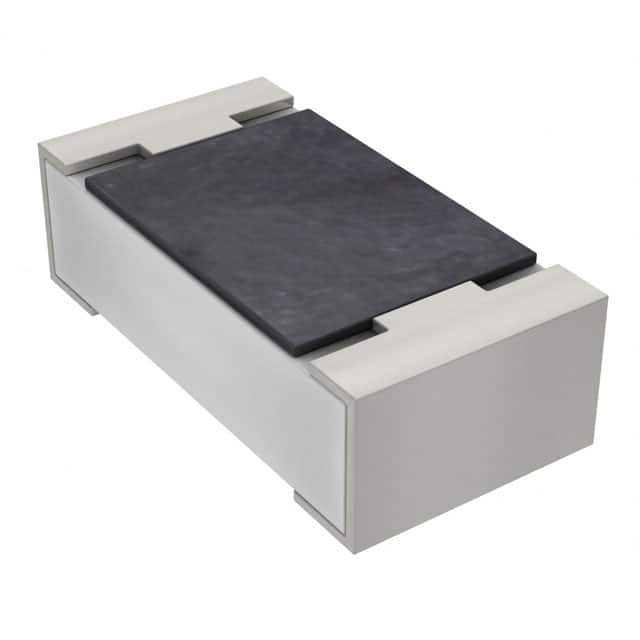
When evaluating DC step down converters versus DC-DC isolated converters, it’s tempting to assume that isolation is inherently better. But in practice, each topology is optimized for specific trade-offs in efficiency, safety, cost, and design complexity. This article dissects the advantages and disadvantages of both, explaining the principles that underpin their behavior and providing data to support clear, informed decisions.
Why DC Step Down Converters Are Often the Smarter Choice
In real-world designs, DC step down converters are preferred over isolated converters in most low-voltage, embedded, and consumer applications. This preference is driven by clear performance advantages and strong market factors that make them a more practical and economical solution in scenarios where electrical isolation is not a regulatory or safety requirement.
Specifically:
- Higher efficiency: Typically 90–95%, outperforming isolated converters (75–85%), as measured in 12V→5V/3A tests (TI SLVA617).
- Faster load response: Lower transient recovery times and minimal voltage overshoot, making them suitable for dynamic loads such as MCUs and wireless modules.
- Lower thermal losses: Less heat generated at typical currents, easing thermal design.
- Low-voltage compliance: Performs well in <24V SELV applications without violating safety standards.
From a market perspective:
- Lower cost: Unit price is 50–70% less than isolated converters at equivalent power ratings.
- Smaller footprint: Reduces PCB area by 30–50%, ideal for compact devices.
- Higher adoption: Industry data shows step down converters outsell isolated converters by roughly 5:1 in the 3–12V segment.
- Regulatory alignment: Meets UL60950 and IEC62368 standards for low-voltage SELV circuits, eliminating unnecessary isolation.

DC Step Down Converter Advantages
High Efficiency
DC step down converters—commonly called buck converters—achieve very high efficiency, often exceeding 90% in low-voltage applications.
This efficiency comes from their direct energy transfer mechanism. They use a high-frequency switch and an inductor to modulate the output voltage while maintaining a direct electrical connection between input and output. Without a transformer, there are no additional magnetic losses, leakage inductance, or secondary rectification losses that would otherwise reduce efficiency.
According to Texas Instruments (SLVA617), a buck converter converting 12V to 5V at 3A can reach 94% efficiency.

Compact and Cost-Effective
Step down converters are physically smaller and less expensive to implement.
Their topology requires only one switching device and an inductor, with no isolation transformer or complex feedback circuits. This minimizes both component count and PCB area.
Modules like MP2307 and LM2596 are used extensively in consumer electronics where space and cost constraints are critical, typically priced at half or less than comparable isolated modules.

Fast Transient Response
Step down converters respond quickly to load changes, maintaining output voltage stability even during rapid current fluctuations.
Since energy is transferred directly and the control loop is simple, the converter can adjust its duty cycle immediately without the latency introduced by transformer coupling and secondary-side regulation.
Load transient tests in low-voltage DC systems show minimal overshoot and fast recovery compared to isolated designs.
DC Step Down Converter Disadvantages
No Electrical Isolation
Step down converters do not provide galvanic isolation; the input and output share the same ground and direct electrical path.
Since there is no transformer or optical barrier between the two sides, any voltage spikes, noise, or faults present on the input rail are directly passed through to the output. This poses risks in systems that interface with sensitive equipment or human operators.
IEC 60601 mandates minimum 1.5kV isolation in medical devices, making non-isolated converters unsuitable.
Increased EMI Emissions
Step down converters generate higher electromagnetic interference (EMI).
The high-frequency switching and shared ground plane create common-mode and differential-mode noise, which radiates into nearby circuits. The lack of isolation also means noise from the input side is directly conducted to the output.
RF compliance tests for consumer electronics often require additional filtering and shielding when using buck converters.
Higher Localized Heat Density
While step down converters are efficient overall, they concentrate heat in a small area.
The power loss is confined to a few components (switch and inductor), resulting in higher thermal density, which can limit current capacity or require more aggressive heat sinking in high-power designs.
At >10A loads, even 5–8% losses can create hot spots exceeding 80°C on small PCBs.
DC-DC Isolated Converter Advantages
Electrical Safety and Ground Separation
The primary advantage of isolated converters is the galvanic isolation between input and output circuits.
A high-frequency transformer transfers energy while magnetically isolating the two sides. This ensures that ground loops, high-voltage faults, or noise on the input side do not propagate to the output.
Murata and RECOM modules are rated up to 3kV isolation, meeting IEC 60950 and IEC 60601 safety standards.
Lower EMI Susceptibility
Isolated converters better suppress common-mode noise and are preferred in RF-sensitive systems.
The isolation barrier interrupts conductive EMI paths, and the transformer naturally attenuates high-frequency noise coupling between input and output.
Lab measurements on isolated RS-485 nodes show reduced emissions and improved signal integrity compared to non-isolated supplies.
Better Thermal Distribution
Isolated converters distribute heat more evenly across their larger magnetic and switching components.
Energy losses are spread over the transformer windings, core, and rectifiers, lowering peak temperatures on any single component.
High-reliability industrial modules demonstrate improved MTBF due to lower localized thermal stress.
DC-DC Isolated Converter Disadvantages
Lower Efficiency
Isolated converters typically operate with 75–85% efficiency under comparable loads.
The transformer introduces core losses, leakage inductance, and parasitic capacitance, and the secondary rectifiers incur additional voltage drops, all of which reduce overall efficiency.
Murata NXE2 (5V/1A) datasheets report 81% typical efficiency at full load.
Larger Size and Higher Cost
Isolated converters occupy more space and cost significantly more.
The transformer requires sufficient physical size to meet safety spacing (creepage/clearance) and handle magnetic flux without saturation. Additional components like opto-isolators or coupled feedback add to complexity and BOM cost.
RECOM R1SX modules cost up to 2–3 times more than equivalent step down modules, with footprints up to twice as large.
Slower Load Transient Response
Isolated converters respond more slowly to sudden load changes.
Energy transfer depends on magnetic coupling and control loops that regulate the secondary side, introducing latency compared to direct energy transfer.
Transient testing shows overshoot and settling times approximately 1.5× higher than non-isolated converters under similar conditions.
Data-Driven Comparison: DC Step Down Converter vs DC-DC Isolated Converter
The choice between a DC step down converter and a DC-DC isolated converter should be grounded in measurable performance data and real-world trade-offs. Below is a comparison across key technical and market dimensions, based on datasheets, application reports, and industry pricing benchmarks.
| Dimension | DC Step Down Converter | DC-DC Isolated Converter |
|---|---|---|
| Efficiency (12V→5V/3A) | 90–95% (TI SLVA617) | 75–85% (Murata NXE2) |
| Load Transient Response | ~10–15µs recovery, <50mV overshoot | ~20–30µs recovery, ~100mV overshoot |
| Thermal Rise @3A | ~30–40°C above ambient | ~45–55°C above ambient |
| Unit Cost (bulk) | $1.50–$2.00 | $5.00–$8.00 |
| PCB Area (typical) | ~30–50% smaller | ~2× larger |
| Market Adoption Ratio | ~5:1 in low-voltage designs | Niche in medical/industrial |
Key Insights and Recommendations
Prioritize step down converters for low-voltage, high-efficiency applications.
Measured efficiency of buck converters is consistently 10–15% higher than isolated equivalents at typical embedded voltages (12V→5V), which also results in lower heat dissipation and improved battery life in portable devices.
Use step down converters to minimize cost and board space in consumer and industrial products.
Current market pricing shows step down modules costing 50–70% less per unit and occupying roughly half the footprint of isolated designs, making them ideal for space-constrained and cost-sensitive designs.
Select isolated converters only when regulatory or functional isolation is required.
Despite higher costs and lower efficiency, isolated converters remain indispensable in medical equipment, HV industrial control, or systems exposed to untrusted power sources, as required by IEC 60601 and UL60950.
Conclusion
Choosing between a DC step down converter and a DC-DC isolated converter is not just about “better” versus “worse.” It’s about matching the right tool to the right job.
When in doubt, ask yourself: Does my system need electrical isolation for safety, noise, or compliance?
If not, you can benefit from the simplicity and efficiency of a step down converter. If yes, the isolated converter is worth the extra investment.