Converting AC to DC power is an essential process in virtually every electronic system—from USB chargers and LED drivers to industrial automation and medical devices.
But what many users and even engineers underestimate is that this conversion is never lossless. Whether it’s heat, parasitic dissipation, or inefficiencies in design, power loss is a built-in reality.
Understanding where, why, and how power is lost during AC to DC conversion can help engineers design more efficient systems and make smarter component choices.
Why Converting AC to DC Involves Power Loss

At its core, converting AC to DC involves several stages: rectification, filtering, and voltage regulation. Each of these steps introduces its own inefficiencies:
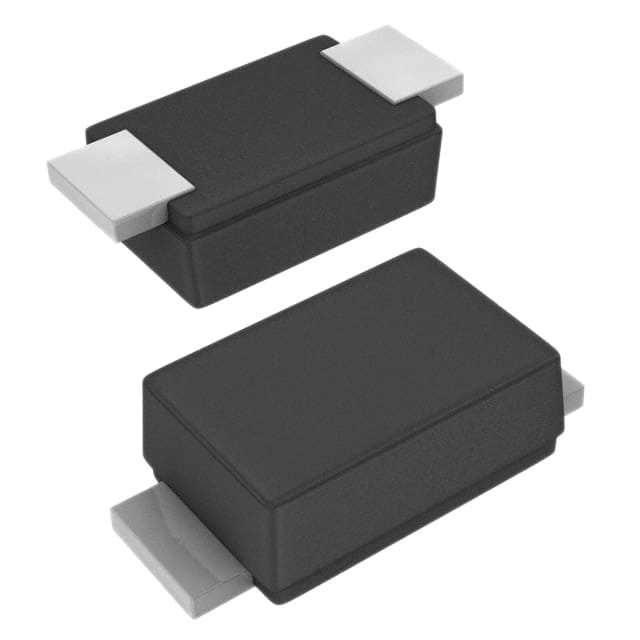
Rectification: Converts AC’s sinusoidal waveform into pulsating DC using diodes or bridge rectifiers. These components drop voltage—typically around 0.7V for silicon diodes—resulting in power lost as heat.
Filtering: Uses capacitors or inductors to smooth the pulsating signal. These passive components exhibit ESR and core losses, which convert some electrical energy into thermal energy.
Regulation: Stabilizes voltage via either linear regulators which burn excess voltage as heat or switching regulators which are more efficient but still experience switching and conduction losses.
In short, each conversion stage performs useful work but extracts a cost from the original input power.
Where Does the Power Go? Understanding Loss Mechanisms
To put it simply: power is lost mostly as heat. Here's a breakdown of the loss pathways in a typical AC to DC conversion system:
| Stage | Component | Loss Type | Example Loss |
|---|---|---|---|
| Rectification | Diodes or bridges | Forward voltage drop | 0.7V × 2A = 1.4W |
| Filtering | Capacitors/Inductors | ESR, ripple current heating | 0.1Ω × (1A)2 = 0.1W |
| Regulation | LDO / Switching IC | Dropout loss or switching loss | Depends on topology |
| EMI Filter | Ferrite beads, X/Y caps | Iron/copper loss | 50–500 mW |
In addition, control ICs, startup circuits, and standby loads all consume quiescent power—usually in the milliwatt range, but they accumulate.

How Much Power Is Typically Lost in AC to DC Conversion?
Losses vary widely depending on converter design and load level. Here’s a rough estimate:
| Converter Type | Efficiency Range | Loss Characteristics |
|---|---|---|
| Linear Power Supply | 40% – 65% | Simple but very lossy |
| Switching Power Supply (SMPS) | 80% – 95% | More complex but highly efficient |
At low load levels e.g. under 10% rated load, even switching converters may see efficiency drop significantly due to fixed control overhead and leakage currents.
A 230V AC to 12V DC adapter rated at 3A (36W) might draw 42W from the wall at full load. That’s ~86% efficiency, or 6W lost—mostly as heat.

AC to DC Converter Efficiency: What the Data Says
Datasheets and test reports back up the fact that modern SMPS designs have come a long way, but perfection is still elusive. Here are real figures from common power supply manufacturers:
- Mean Well LRS-35-12: Efficiency ~88% at full load
- TDK-Lambda LS25-12: Efficiency ~89%
- Generic Linear Adapter: Often below 60%
Additionally, DOE Level VI and EU Ecodesign regulations now require AC-DC adapters to consume <0.1W in standby, pushing the industry toward higher efficiency even when idle.
Temperature also matters: converters may drop 2–5% in efficiency as ambient temperature rises beyond 50°C due to increased conduction losses and derating behavior.
Can You Reduce the Power Loss During AC to DC Conversion?
Yes, but only with smart design and informed choices. Here are actionable strategies:
- Choose SMPS over Linear Regulators: Unless noise sensitivity demands otherwise, a switching design can save >30% of input energy.
- Optimize Load Matching: Operate the converter around 50–80% of its rated load where efficiency peaks.
- Minimize Standby Consumption: Select converters with low quiescent current, especially for battery-powered or always-on applications.
- Improve Thermal Design: Use proper heat sinks, thermal vias, or active cooling to reduce temperature-induced losses.
In essence, you can’t eliminate power loss, but you can certainly engineer around it.
When Power Loss Becomes a Critical Issue
In some applications, even small losses have large consequences:
Battery-powered medical devices: A few watts lost = several hours less operation.
Data centers: A 5% loss in AC-DC conversion translates to thousands of dollars annually.
Compact enclosures: Every extra watt raises internal temperature, risking thermal shutdown or reduced lifespan.
Regulatory compliance is another pressure point: industries like healthcare, telecom, and consumer electronics must now meet strict energy efficiency mandates, making power loss not just a design concern—but a legal one.
Conclusion
Power loss during AC to DC conversion is unavoidable, but it’s not unmanageable. By understanding where and why loss occurs, engineers can:
Choose the right converter topology for the task
Stay within the most efficient load range
Balance thermal, efficiency, and regulatory trade-offs
Ultimately, when converting AC to DC power, the goal isn’t to eliminate loss—but to minimize it intelligently.